

4.9 Star Rating | 500+ Google Reviews
Acrylic vs. Fiberglass Tubs: Which Is Better for Your Bathroom?



Key Takeaways
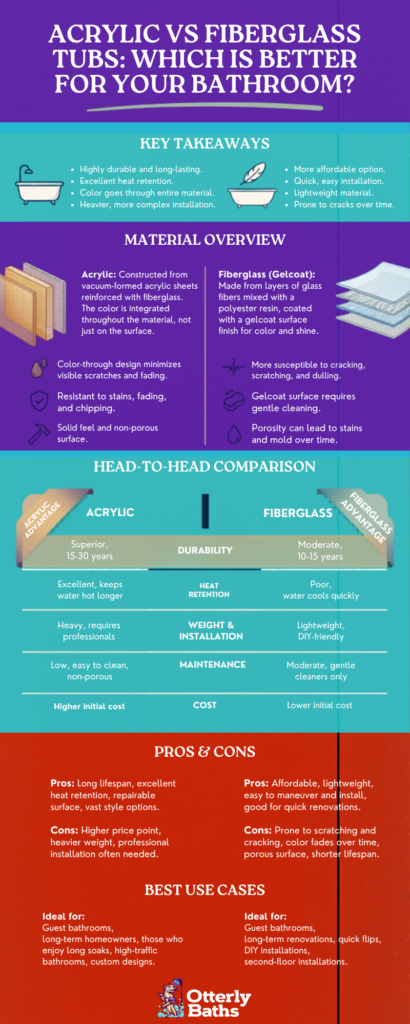
- Acrylic tubs offer superior durability and heat retention, making them a premium choice for long-term bathroom upgrades.
- Fiberglass bathtubs provide an affordable, lightweight solution that works perfectly for budget-friendly renovations and quick installations.
- Partnering with an experienced Bathtub Remodeler ensures you select the right material for your specific home layout, budget, and daily usage requirements.
Upgrading your bathroom is a significant investment. Among the most crucial decisions you will face is selecting the right bathtub material. The market is filled with options, but two of the most popular choices frequently dominate the conversation: acrylic and fiberglass. Both materials offer distinct advantages, yet they cater to very different needs, budgets, and long-term goals.
Many homeowners find themselves confused by the technical differences between these two plastics. At first glance, an acrylic tub and a fiberglass tub might look nearly identical. They both feature a smooth, glossy finish. They are both manufactured in a wide variety of shapes and sizes. However, the manufacturing processes, structural integrity, and long-term performance of these materials vary drastically.
Understanding these differences is essential for a successful bathroom renovation. A bathtub is not an item you want to replace every few years. It serves as the focal point of your space and a daily utility for your family. Choosing the wrong material can lead to premature cracking, fading, or excessive maintenance.
This comprehensive guide breaks down everything you need to know about acrylic and fiberglass bathtubs. We will explore their manufacturing processes, compare their durability and maintenance requirements, and evaluate their overall cost-effectiveness. By the end of this article, you will have the knowledge needed to make an informed decision for your upcoming project with a trusted Lexington KY Bathroom Contractor.
Understanding the Manufacturing Process
To truly appreciate the differences between these two materials, it helps to understand how they are made. The manufacturing process directly dictates the strength, weight, and price of the final product.
What is a Fiberglass Bathtub?
Fiberglass, also known as fiberglass-reinforced plastic (FRP), is a highly accessible and affordable material. The creation of a fiberglass bathtub involves forming a mold and spraying it with a specialized gel coat. This gel coat serves as the visible, glossy layer of the tub. After the gel coat is applied, manufacturers layer spun glass fibers mixed with a polyester resin over the mold.
Once the resin cures and hardens, the tub is removed from the mold. The resulting product is extremely lightweight. Because the materials are inexpensive and the manufacturing process is relatively quick, fiberglass tubs are highly cost-effective. Builders and contractors frequently use them in new home constructions and budget-conscious remodeling projects.
What is an Acrylic Bathtub?
Acrylic bathtubs start with a solid sheet of colored acrylic plastic. This sheet is heated until it becomes pliable. Manufacturers then use powerful vacuums to draw the softened acrylic sheet into a bathtub mold.
Once the acrylic cools and holds its shape, the tub is reinforced. This is where the two materials overlap: acrylic tubs are actually reinforced with fiberglass. Layers of fiberglass and resin are sprayed onto the underside of the acrylic shell to provide structural stability.
Because the color is baked completely through the thick acrylic sheet, the finish is much more robust than the thin gel coat of a standard fiberglass tub. The combination of the solid acrylic surface and the fiberglass reinforcement creates a heavier, stronger, and more resilient fixture.
Head-to-Head Comparison
When deciding between acrylic and fiberglass, you must weigh several critical factors. Let us examine how these materials stack up against each other in the areas that matter most to homeowners.
Durability and Longevity
Durability is often the deciding factor for homeowners planning a permanent upgrade.
Acrylic easily wins the durability contest. The thick, continuous sheet of plastic resists chipping, cracking, and fading. Because the color goes all the way through the material, minor scratches are less noticeable and can often be buffed out. Acrylic is also non-porous, meaning it naturally resists mold and mildew buildup. With proper care, an acrylic bathtub can look brand new for decades.
Fiberglass is inherently more fragile. The thin gel coat is prone to scratching and fading over time, especially if exposed to harsh cleaning chemicals or direct sunlight. Because fiberglass is slightly porous, it can absorb water over many years, potentially leading to warping or cracking. A typical fiberglass tub has a lifespan of about ten to fifteen years before it requires resurfacing or replacement.
Heat Retention
If you enjoy taking long, relaxing baths, heat retention is a vital consideration. You want a material that keeps your bathwater warm for as long as possible.
Acrylic is an excellent insulator. The material naturally retains heat, keeping your water warm and extending your bathing time. This makes acrylic an ideal choice for deep soaking tubs and whirlpool models.
Fiberglass is a poor insulator. It cools down rapidly, pulling the heat out of your bathwater. If you choose a fiberglass tub, you may find yourself constantly adding hot water to maintain a comfortable temperature.
Weight and Installation
The weight of a bathtub impacts the installation process and, occasionally, the structural requirements of your home.
Fiberglass is exceptionally lightweight. This makes it incredibly easy to transport, maneuver through narrow hallways, and install. If you are installing a tub on the second floor of an older home, the lightweight nature of fiberglass can be a massive advantage. It rarely requires additional floor reinforcement.
Acrylic is heavier due to the thick plastic sheet and the added fiberglass reinforcement. While it is still much lighter than cast iron or stone, an acrylic tub may require a bit more effort to install. However, any professional Bathtub Remodeler will have no trouble safely installing an acrylic tub in a standard bathroom.
Maintenance and Cleaning
Nobody enjoys scrubbing the bathtub. Choosing a low-maintenance material can save you hours of strenuous cleaning.
Acrylic is incredibly easy to clean. Its non-porous surface prevents dirt, soap scum, and bacteria from taking hold. Warm water, a mild dish soap, and a soft sponge are usually all you need to keep an acrylic tub sparkling. You should avoid abrasive cleaners, as they can dull the glossy finish.
Fiberglass requires more careful maintenance. The gel coat can easily scratch if you use abrasive sponges or harsh chemicals. Once the gel coat is scratched, the porous fiberglass underneath is exposed, allowing dirt and grime to become deeply embedded. Cleaning an older, scratched fiberglass tub can be a frustrating and labor-intensive task.
Cost and Budget
Budget constraints play a significant role in any home improvement project.
Fiberglass is the clear winner regarding upfront costs. It is one of the most affordable bathtub materials on the market. If you need a functional, attractive tub for a guest bathroom or a rental property, fiberglass is a highly economical choice.
Acrylic requires a higher initial investment. The complex manufacturing process and superior materials drive up the price. However, when you factor in the extended lifespan and lower maintenance requirements, acrylic often provides better long-term value. You will not have to pay for a replacement tub nearly as soon as you would with fiberglass.
Pros and Cons Breakdown
To simplify your decision, here is a clear breakdown of the advantages and disadvantages of each material.
Fiberglass Pros and Cons
Pros:
- Highly affordable upfront cost.
- Very lightweight, making transportation and installation simple.
- Easy to repair minor surface damage with a fiberglass repair kit.
- Available in numerous standard shapes and sizes.
Cons:
- Prone to scratching, fading, and discoloration.
- Shorter overall lifespan (typically 10-15 years).
- Poor heat retention for bathwater.
- The porous surface can harbor mold and grime over time.
Acrylic Pros and Cons
Pros:
- Exceptional durability and resistance to chipping and cracking.
- Excellent heat retention for longer, warmer baths.
- Non-porous surface is easy to clean and resists mold.
- Color goes completely through the material, hiding minor scratches.
- Long lifespan provides excellent return on investment.
Cons:
- Higher initial purchase price compared to fiberglass.
- Heavier material requires slightly more effort to install.
- Can be damaged by abrasive cleaning pads or harsh chemicals.
How to Choose the Right Tub for Your Home
Selecting between acrylic and fiberglass ultimately comes down to your specific circumstances.
If you are renovating a master bathroom that sees heavy daily use, an acrylic tub is highly recommended. The durability, easy maintenance, and premium appearance justify the higher price tag. Acrylic is also the better choice if you prioritize long, hot baths, thanks to its excellent heat retention.
On the other hand, if you are working with a strict budget, updating a guest bathroom that is rarely used, or preparing a house for sale, a fiberglass tub might be the perfect fit. It provides a clean, updated look without demanding a massive financial commitment.
Working with a reliable Lexington KY Bathroom Contractor can provide clarity. A professional contractor can assess your current plumbing, evaluate your floor’s structural integrity, and recommend the best material for your unique space. They can also ensure the installation is handled flawlessly, preventing leaks and maximizing the lifespan of whichever tub you choose.
Frequently Asked Questions
Can you repair a cracked fiberglass or acrylic tub?
Yes, both materials can be repaired. Fiberglass repair kits are inexpensive and relatively easy to use for small cracks or chips. Acrylic repairs are also possible but often require professional buffing and specialized tools to restore the seamless, glossy finish properly.
Does acrylic turn yellow over time?
High-quality acrylic is highly resistant to fading and yellowing. The color is baked into the material. Fiberglass, however, is notorious for yellowing as the gel coat wears down and reacts to UV light and cleaning chemicals.
Can I use bleach to clean my tub?
You should avoid using harsh chemicals like bleach or ammonia on both acrylic and fiberglass tubs. These chemicals can degrade the finish. Stick to mild soaps, warm water, and soft cloths to protect your investment.
Which material is better for a shower-tub combo?
Acrylic is generally preferred for a heavily used shower-tub combo due to its resistance to daily wear and tear. However, fiberglass shower-tub surrounds are incredibly popular for quick, budget-friendly installations.
Make the Right Choice for Your Bathroom Upgrade
Choosing between acrylic and fiberglass bathtubs does not have to be a stressful experience. By evaluating your budget, your bathing habits, and your long-term goals for the home, the right choice becomes clear. Acrylic offers premium durability, heat retention, and low maintenance for a higher price. Fiberglass delivers affordability and lightweight convenience for quick, cost-effective renovations.
Whichever material you lean toward, the quality of the installation matters just as much as the tub itself. Reach out to Otterly Baths today. As a trusted local expert, we can help you design the perfect space and handle every detail of your renovation with precision and care.


 All Service Areas