

4.9 Star Rating | 500+ Google Reviews
Can Any Shower Be Converted Into a Bathtub?



Quick answer: While most showers can be replaced with a bathtub, not every shower space can accommodate one without structural modifications. A successful Shower To Tub Conversion requires a minimum footprint of 30 by 60 inches, proper plumbing alignment for the drain, and sufficient floor support to handle the heavy weight of a water-filled bathtub.
Key Takeaways
- Space and structural integrity dictate whether your current shower enclosure can safely fit a bathtub.
- Plumbing modifications are almost always necessary to align drains, adjust pipe sizes, and install new tub spouts.
- Consulting a professional Philadelphia Bathroom Remodeling Company like Otterly Baths ensures a safe, code-compliant, and waterproof installation.
Many homeowners eventually find themselves longing for the relaxation of a warm soak at the end of a long day. If your home only features stand-up showers, you might be wondering how difficult it is to make a change. Adding a bathtub can improve your daily routine, make bathing young children much easier, and even boost your property’s resale value.
However, swapping fixtures is rarely as simple as pulling one out and dropping another in its place. Bathrooms are highly engineered spaces where water, electricity, and structural framing intersect. Understanding the technical requirements of this project will help you plan your budget and timeline accurately.
By reading this guide, you will learn exactly what space, plumbing, and structural requirements are needed to turn your current shower into a fully functioning bathtub.
What are the space requirements needed to fit a new bathtub?
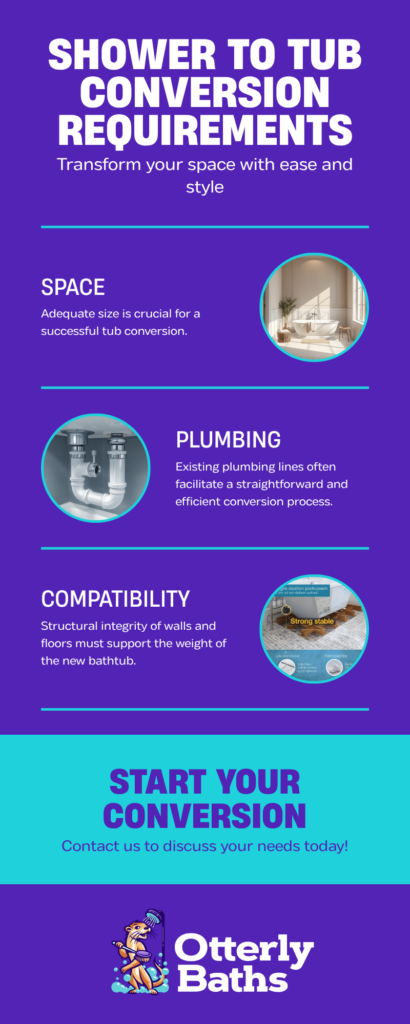
The most immediate hurdle in any Shower To Tub Conversion is the physical footprint of your bathroom. Standard alcove bathtubs measure 60 inches long and 30 inches wide. In contrast, many stand-alone showers—especially corner units—only measure 32 by 32 inches or 36 by 36 inches.
If your current shower is smaller than a standard tub, your remodeling team will need to borrow space from the surrounding area. This might involve moving a toilet, shifting a vanity, or even pushing back an interior wall.
When deciding on the type of tub to install, you should base your choice on your available floor plan. Choose a standard alcove tub if you already have a 60-inch recessed space between three walls. Choose a freestanding tub if your bathroom has a larger, open layout that allows for walking room around all sides of the fixture. Otterly Baths helps homeowners evaluate their existing floor plans to find the most efficient layout for their new bathing space.
Do you need to change the plumbing when replacing a shower with a tub?
Yes, replacing a shower with a bathtub almost always requires significant plumbing modifications. Showers and bathtubs drain water differently, and their supply lines sit at different heights on the wall.
First, the drain location rarely matches up perfectly. Shower drains are usually positioned in the center of the floor, while standard bathtub drains are located at one end. Your plumber will need to open the floor to relocate the drain pipe. Additionally, shower drains typically use a 2-inch pipe to handle a high volume of fast-flowing water, whereas tub drains traditionally use a 1.5-inch pipe.
Second, the water supply valves must be reconfigured. A shower only requires a mixing valve at chest or waist height to route water to the showerhead. A bathtub requires a lower valve and a dedicated tub spout to fill the basin. Your contractor will need to open the wall to install these new fixtures and ensure everything is properly waterproofed before sealing it back up.
Can your bathroom floor support the weight of a new bathtub?
Water is incredibly heavy. A standard bathtub filled with water and an adult bather can easily weigh between 700 and 1,000 pounds. If you opt for a cast iron or stone resin tub, the empty fixture alone can weigh over 300 pounds.
Most standard stand-up showers do not place this level of concentrated stress on your floor joists. Before installing a tub, a professional contractor must inspect the wooden joists beneath your bathroom floor. If the framing is undersized, damaged by previous water leaks, or simply too old to support the added load, the floor will need structural reinforcement. This process typically involves adding additional wooden supports, known as “sistering” the joists, to safely distribute the weight.
Why should you hire a professional team for your bathroom remodel?
Bathroom renovations involve complex building codes, waterproofing standards, and specialized labor. A DIY mistake in a bathroom can lead to devastating water damage, mold growth, and compromised structural integrity.
Partnering with a dedicated Philadelphia Bathroom Remodeling Company ensures that every aspect of the project is handled correctly. The team at Otterly Baths manages the entire process from start to finish. We pull the necessary permits, assess your floor’s structural health, reroute the plumbing safely, and install a flawless waterproofing system. Relying on experts protects your home and guarantees a beautiful, long-lasting result.
Ready to upgrade your bathroom with a relaxing new tub?
Transforming your basic shower into a luxurious bathtub is a highly rewarding investment that enhances your home’s comfort and functionality. While the process requires careful planning regarding space, plumbing, and structural support, the right team makes the transition seamless.
If you are ready to explore your remodeling options, contact the experts at Otterly Baths today. We will evaluate your current bathroom layout, discuss your design preferences, and provide a clear roadmap for your renovation project.
Frequently Asked Questions About Shower and Tub Conversions
How long does it take to convert a shower into a bathtub?
A standard conversion typically takes between three to five days to complete. However, if your project requires extensive plumbing relocation, structural floor reinforcement, or moving interior walls, the timeline can extend to two weeks.
Will adding a bathtub increase my home’s resale value?
Yes, having at least one bathtub in a home generally increases its market appeal, particularly for families with young children or pets. Real estate experts often recommend maintaining at least one full bathtub in the house to attract the widest range of potential buyers.
Can I install a freestanding tub in a small bathroom?
Installing a freestanding tub in a small bathroom is generally not recommended. Freestanding tubs require several inches of clearance on all sides for cleaning and maintenance. If your bathroom is compact, an alcove or corner tub is a much better choice to maximize your available floor space.


 All Service Areas