

4.9 Star Rating | 500+ Google Reviews
Best Bathtubs for Small Bathrooms: A Space-Saving Guide



Quick answer: The best bathtubs for small bathrooms include alcove tubs, corner tubs, soaking tubs, and walk-in tubs. These designs maximize comfort while fitting tight footprints—often under 60 inches long. The right choice depends on your layout, budget, and how you like to bathe.
Small bathroom? You don’t have to give up the luxury of a good soak. With the right tub, even the tiniest space can feel like a spa retreat. The trick is choosing a design that fits your footprint without crowding the room.
In this guide, we’ll walk through the best bathtub styles for small bathrooms, share practical tips for measuring your space, and explain what to look for before you buy. By the end, you’ll know exactly which tub suits your home—and how to make the most of every square inch.
Key Takeaways
- The best bathtubs for small bathrooms include alcove, corner, soaking, and walk-in styles—each designed to save space without sacrificing comfort.
- Measuring your bathroom carefully and considering your plumbing layout are essential steps before any bathtub replacement.
- A trusted Philadelphia PA bathroom contractor like Otterly Baths can help you choose and install the perfect tub for your space.
Why Tub Choice Matters in a Small Bathroom
In a compact bathroom, every inch counts. A bulky tub can make the whole room feel cramped, while a smart, space-conscious design opens things up. The right tub balances three things: comfort, function, and footprint.
Beyond looks, the wrong tub can create real problems—awkward door clearance, blocked storage, or a tight squeeze every time you step in. Choosing wisely from the start saves you money and frustration down the road. That’s why a thoughtful bathtub replacement is one of the smartest upgrades you can make in a small space.
What Are the Best Bathtub Styles for Small Bathrooms?
Several tub styles are built specifically with tight spaces in mind. Here are the top contenders.
Alcove Bathtubs
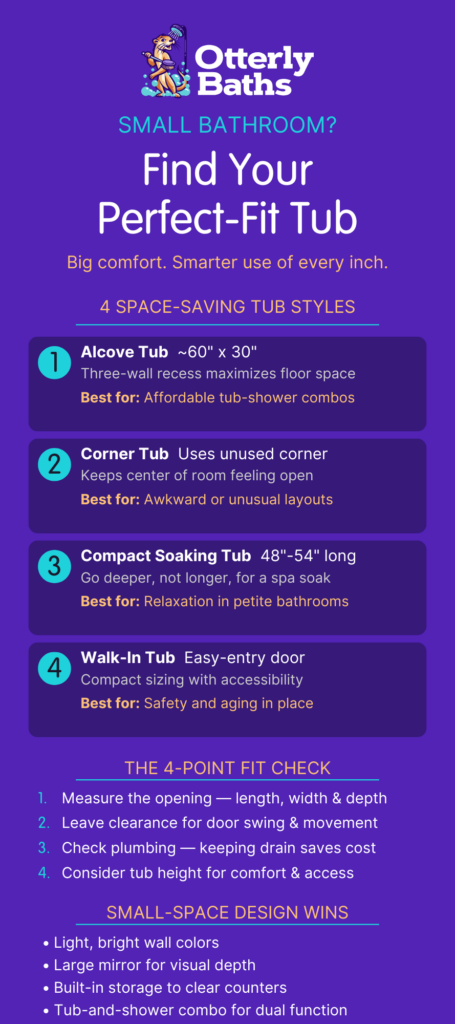
Alcove tubs are the most popular choice for small bathrooms—and for good reason. They tuck neatly into a three-walled recess, using existing walls to save space. Most measure around 60 inches long and 30 inches wide, making them a reliable fit for standard layouts. They’re also budget-friendly and easy to pair with a shower combo.
Best for: Homeowners who want a practical, affordable tub-and-shower setup.
Corner Bathtubs
Corner tubs make use of an often-wasted spot: the corner. Their triangular shape frees up the center of the room, which can make a small bathroom feel more open. While some corner tubs run large, compact models offer a deep soak without dominating the floor plan.
Best for: Bathrooms with an awkward corner or unusual layout.
Soaking Tubs
If a relaxing bath is your priority, a soaking tub delivers. These tubs are deeper than standard models, letting you submerge fully even in a shorter length. Many compact soaking tubs measure just 48 to 54 inches long, making them ideal for petite bathrooms.
Best for: Anyone who values a deep, spa-like soak over a large surface area.
Walk-In Tubs
Walk-in tubs feature a watertight door, so you can step in without climbing over a high wall. They’re a great option for older adults or anyone with mobility concerns. Many models come in compact sizes that fit standard alcove openings, combining safety with space efficiency.
Best for: Aging-in-place homeowners or those who prioritize accessibility.
Freestanding Tubs
Don’t count out freestanding tubs just because your space is small. Compact, oval-shaped models can act as a stylish centerpiece without overwhelming the room. They do need a bit of breathing space around them, so they work best when you can spare a few inches on each side.
Best for: Style-focused homeowners with a slightly more flexible layout.
How Do You Measure a Small Bathroom for a New Tub?
Before any bathtub replacement, accurate measurements are a must. Here’s a simple approach:
- Measure the alcove or space. Note the length, width, and depth of the area where the tub will go.
- Account for clearance. Leave room for the door to swing and for comfortable movement around the tub.
- Check your plumbing. Confirm where the drain and water lines sit, since moving them adds cost.
- Think about height. A deeper tub holds more water but may be harder to step into.
When in doubt, bring in a professional. A skilled Philadelphia PA bathroom contractor can measure your space, flag potential issues, and recommend the best fit.
What Should You Consider Before Buying?
Beyond size, a few factors shape the right choice:
- Material: Acrylic and fiberglass are lightweight and affordable. Cast iron and stone are durable but heavy, which can affect installation.
- Maintenance: Some surfaces resist stains and scratches better than others. Consider how much upkeep you’re willing to do.
- Budget: Factor in the tub, installation, and any plumbing changes. A clear budget keeps your project on track.
- Resale value: A clean, modern tub can boost your home’s appeal if you plan to sell.
Making the Most of a Small Bathroom
A well-chosen tub is only part of the picture. Light colors, large mirrors, and built-in storage all help a small bathroom feel bigger. Pairing your new tub with smart design choices creates a space that feels both functional and relaxing.
The good news? You don’t have to figure it all out alone. The right contractor will guide you from measurement to installation, making sure your new tub fits your space and your lifestyle.
Ready to Upgrade Your Small Bathroom?
The best bathtub for a small bathroom is the one that fits your space, suits your routine, and brings you a little joy each day. Whether you choose an alcove, corner, soaking, or walk-in tub, the key is planning ahead and measuring carefully.
If you’re ready to make the switch, Otterly Baths is here to help. As your trusted Philadelphia PA bathroom contractor, we specialize in bathtub replacement that turns even the smallest bathroom into a space you’ll love. Reach out today for a consultation and let’s bring your dream bathroom to life.
Frequently Asked Questions
What is the smallest bathtub size available?
The smallest standard bathtubs measure around 48 inches long, often called “soaker” or “Japanese-style” tubs. These deep, compact designs let you soak comfortably even in very tight spaces.
Is a tub or shower better for a small bathroom?
It depends on your needs. A tub-and-shower combo offers the best of both worlds in a small space, while a standalone shower can free up more floor area. If you love baths or plan to resell, keeping a tub is often the smarter move.
How much does a bathtub replacement cost?
Costs vary based on the tub style, materials, and any plumbing changes. A straightforward swap is more affordable, while moving plumbing or upgrading materials adds to the total. A local contractor can give you an accurate estimate for your project.
Can I install a bathtub myself?
While experienced DIYers can handle simple swaps, most bathtub replacements involve plumbing, leveling, and waterproofing best left to professionals. Hiring a qualified contractor helps avoid leaks and costly mistakes.


 All Service Areas